
Phase 2: Advanced Obedience & Public Readiness
Service dogs that restore confidence, safety, and freedom — trained to the highest professional standards.
Phase 2 Overview
Phase 2 is an estimated 16–20-week training phase with about 200–300 training hours that transitions each dog from controlled environments to busy public settings. Dogs develop consistent obedience, calm focus, and composure under distraction in preparation for task work in Phase 3 and early Phase 4.
Ages, durations, and hours are estimates: each dog progresses at its own pace. Overall timing also depends on the number and complexity of the owner’s required tasks.
At a Glance:
Phase: 2 – Advanced Obedience & Public Readiness
Estimated Length: About 16–20 weeks
Estimated Training Hours: About 200–300 (approximately 400–500 total through Phase 2)
Estimated Age: Starts at about 36–40 weeks old (8–9 months); finishes at about 52–60 weeks old (12–14 months)
Primary Focus: Public manners, impulse control, distraction proofing
AKC Title Tested: AKC Urban Canine (CGC-U)
Estimated phase investment: $12,000
Includes: Daily public training trips, obedience reinforcement, progress evaluation by third-party trainer
Phase investments are estimates, not fixed fees; your allocation may be lower or higher depending on your dog’s training plan. Service dogs start at $25,000, with full program pricing from $25,000 to $50,000. We confirm your total and payment structure during consultation.
What Phase 2 Looks Like
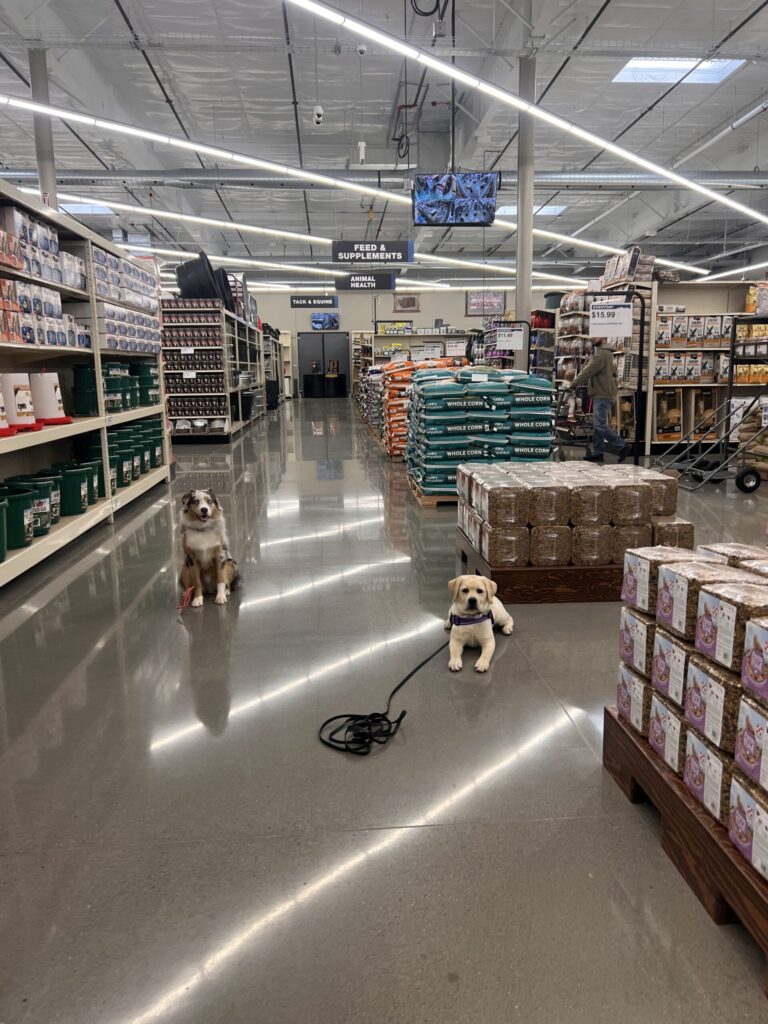
Phase 2 builds on the foundations established in Phase 1, preparing each dog for serious public work. Dogs typically begin this phase at about 36–40 weeks of age (roughly 8–9 months), depending on individual progress.
Our trainers take each dog into public daily — exposing them to stores, medical offices, school campuses, elevators, and parking lots — gradually raising difficulty to strengthen obedience and calm composure.
Every day is an opportunity to test focus, problem-solve, and reinforce the behaviors that support reliable service work.
Core Training Focus
During Phase 2, our trainers refine and challenge the skills learned in Phase 1, layering new expectations and environments.
Dogs work on:
Heel with sustained focus in crowds and narrow aisles
Sit / Down / Stay for extended durations around distractions
Polite greetings with strangers and other dogs
Impulse control around food, toys, and movement
Vehicle loading & unloading calmly and safely
Recovery from startle or unexpected stimuli
Handler focus drills — maintaining eye contact and responsiveness even in chaos
This is the phase where obedience meets reliability. The dog learns that commands apply anywhere, not just in a quiet training room.
Developing Calm Confidence in Public
Service dogs must navigate the real world with composure.
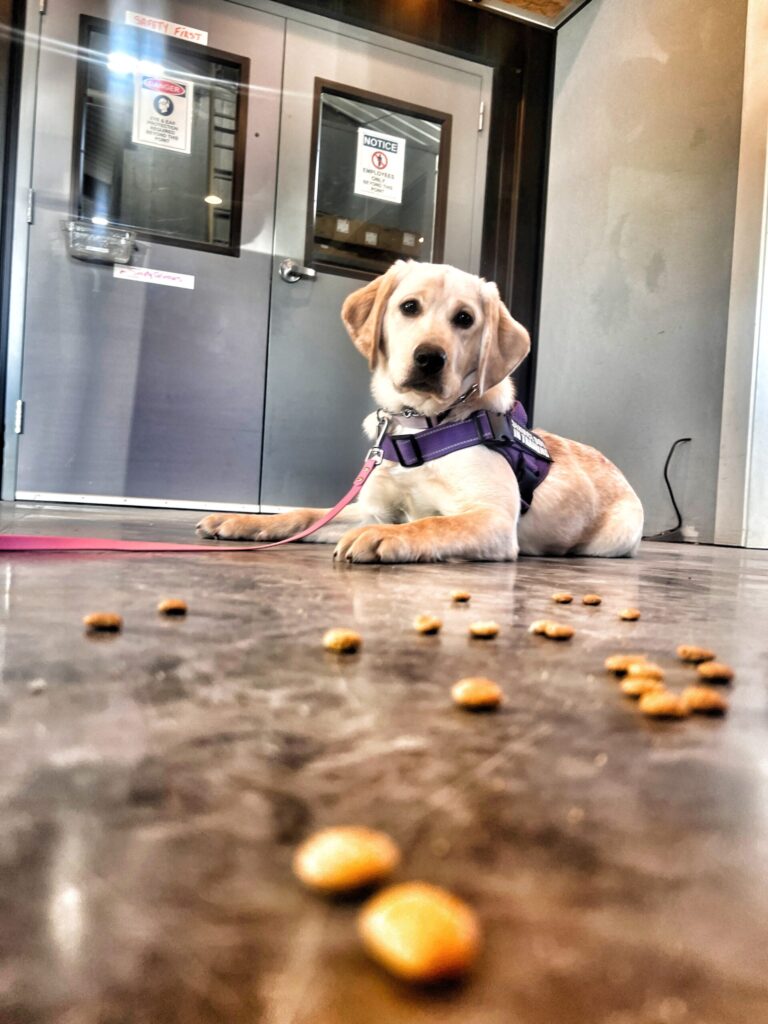
In Phase 2, our focus shifts from basic manners to environmental neutrality — the ability to remain relaxed, confident, and responsive in unpredictable settings.
Examples of exposure training:
-
Busy downtown areas and shopping centers
-
Restaurants and cafes with food distractions
-
Elevators, buses, and parking garages
-
Public parks and school zones
Each outing is carefully planned to be a positive experience—reinforcing adaptability and emotional control. Our trainers observe body language and stress cues, ensuring confidence builds steadily, never forcefully.

Preparing for Task Work
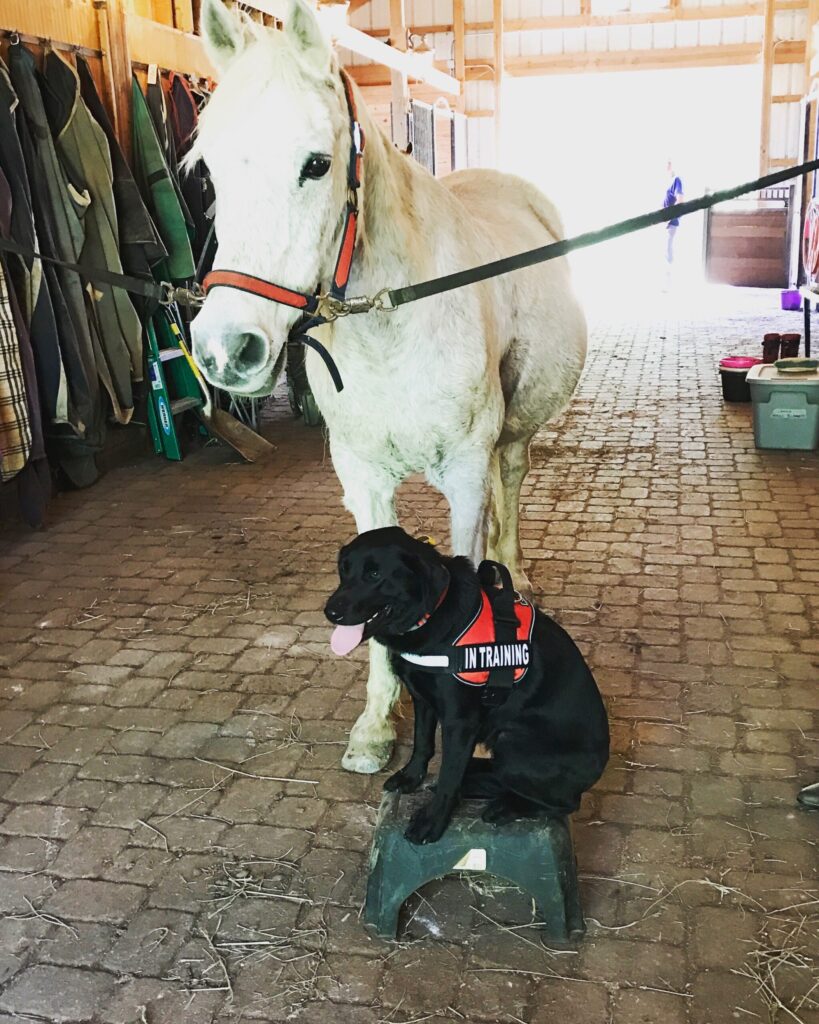
Phase 2 develops the obedience, focus, and public-readiness skills that support later task work. Clients can discuss their specific needs with our trainers so the program remains tailored to the future owner.
Task-specific work is integrated into Phase 3 and continues into early Phase 4 before going home. The number and complexity of required tasks affect the training needed, and each dog progresses at its own pace.
Testing & Certification
At the end of Phase 2, dogs are evaluated by a third-party AKC Evaluator for the AKC Urban Canine Good Citizen (CGC-U) title.
This test proves that a dog can:
Demonstrate obedience and calm focus amid heavy distractions
Behave appropriately in public facilities and transportation
Navigate traffic, pedestrians, and noises with confidence
Passing this test certifies readiness for Phase 3 — specialized task training and handler integration.
Phase 2 Summary
Phase 2 – Advanced Obedience & Public Readiness
Estimated phase investment: $12,000
Estimated Length: About 16–20 weeks
Estimated Training Hours: About 200–300 (approximately 400–500 total through Phase 2)
AKC Title Tested: AKC Urban Canine (CGC-U)
Focus: Public exposure, impulse control, handler focus, preparation for later task work
Evaluator: Third-party AKC certified trainer in busy city environment
Each dog progresses at its own pace. Task work takes place in Phase 3 and early Phase 4 before going home; the number and complexity of required tasks may extend the overall timeline.
Financing: Flexible options available for qualified clients. Ask about funding assistance or nonprofit referrals.
Phase investments are estimates, not fixed fees; your allocation may be lower or higher depending on your dog’s training plan. Service dogs start at $25,000, with full program pricing from $25,000 to $50,000. We confirm your total and payment structure during consultation.