
Therapy Dogs That Heal and Inspire
Our therapy dogs bring calm energy and genuine connection into the places people need it most — classrooms, hospital rooms, clinics, and offices throughout the Inland Northwest. Every dog is trained and prepared for public settings. They are waiting of their new handler.
What Is a Therapy Dog? (And How Is It Different?)
People often use “therapy dog,” “service dog,” and “emotional support animal” interchangeably — but they’re legally and functionally different, and knowing the difference helps you find the right fit.
- Service Dogs are trained to perform specific tasks for one person with a disability and have public access rights under the ADA.
- Emotional Support Animals (ESAs) provide comfort to their owner through companionship but aren’t task-trained and don’t have public access rights.
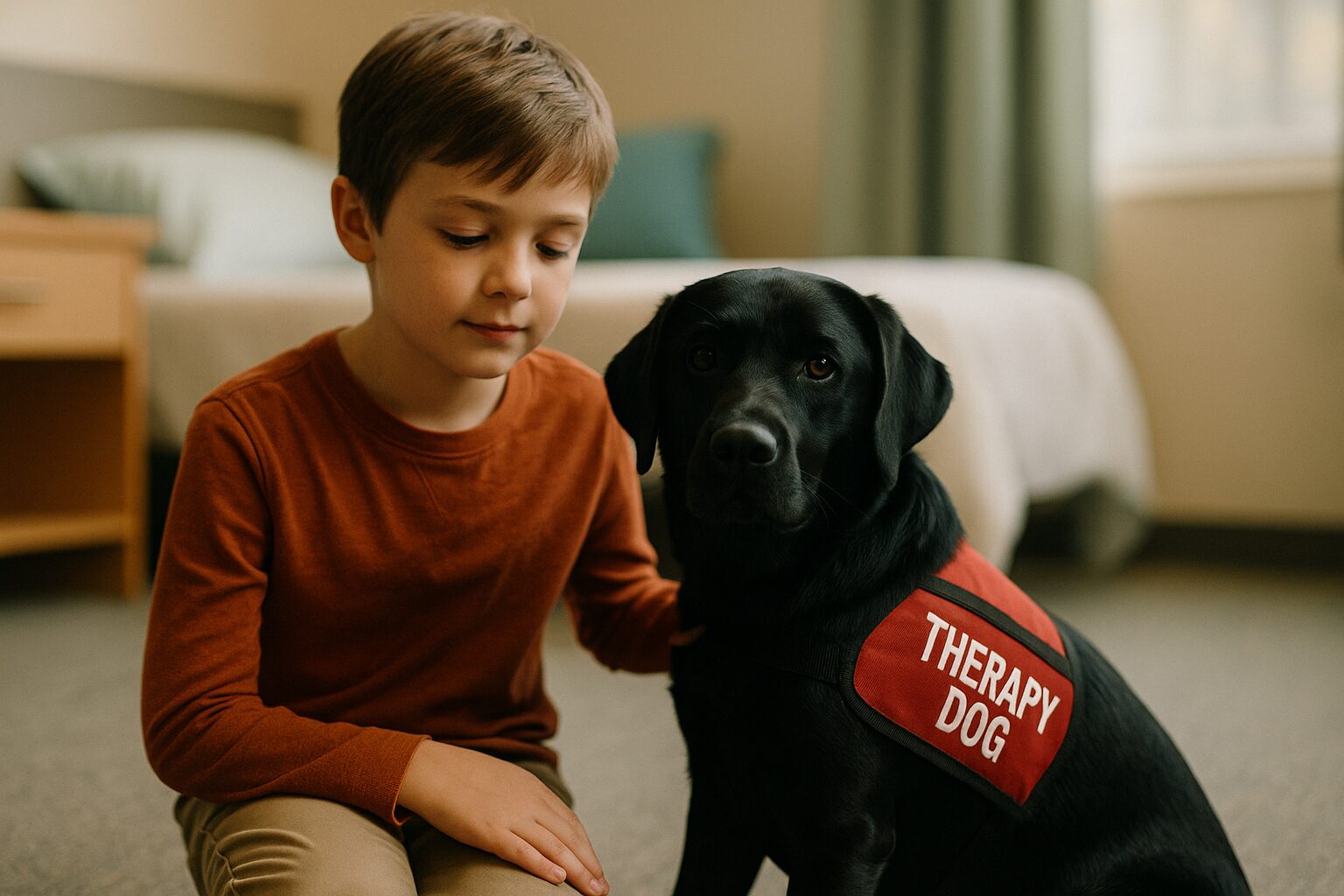
- Therapy Dogs work with a handler to bring comfort and connection to other people — students, patients, residents, employees — in settings where they’re invited, like schools, hospitals, and care facilities. They don’t carry ADA public access rights, but they’re welcomed wherever they’re scheduled.
Every Northwest Elite therapy dog completes the same foundation as our service dogs: hundreds of hours of obedience, socialization, and AKC Canine Good Citizen testing — so the dog arriving at your door is calm, predictable, and genuinely good with people.
Who Our Therapy Dog Program Is Perfect For
Therapy Dogs are ideal for:
Educators and school counselors supporting student emotional well-being.
Healthcare professionals improving patient morale and recovery.
Non-profits and community outreach organizations enhancing engagement.
Individuals or families seeking meaningful volunteer opportunities through animal-assisted therapy.
Every handler learns to:
Read and respond to canine body language.
Manage calm, professional public interactions.
- Maintain the obedience we have taught the dog.
Maintain safety and etiquette during visits.
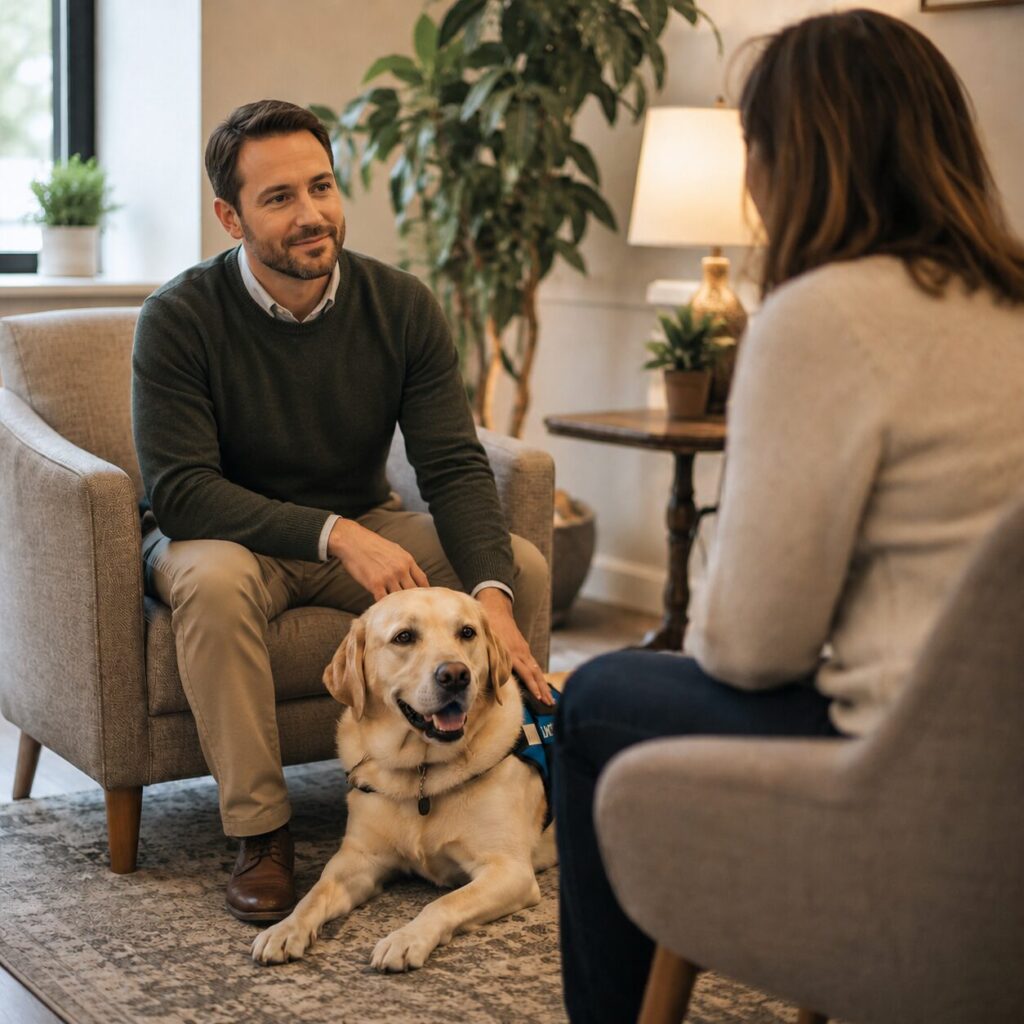
What Our Therapy Dog Training Covers
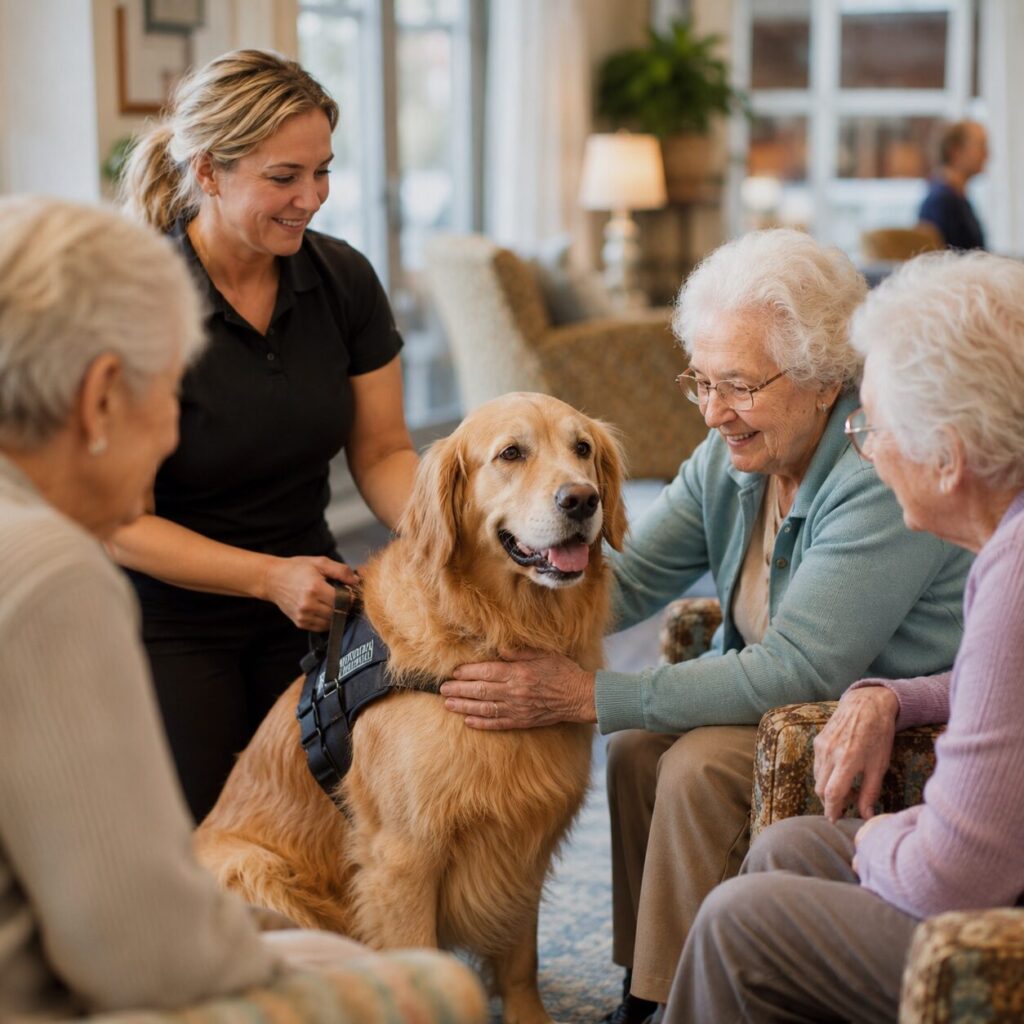
Our comprehensive curriculum includes:
- Basic Obedience skills
Advanced obedience and focus in high-distraction settings.
Polite crowd behavior and calm greetings.
Desensitization to wheelchairs, medical equipment, and environmental noises.
Extended down-stays and patient interaction etiquette.
Handler training and hands on practice.
All training uses real-world simulations to prepare dogs for authentic therapeutic settings.
Our therapy dogs come from our own service dog training program. When a dog in training shows all the right qualities — exceptional obedience, solid temperament, real-world confidence — but isn’t quite right for the focused, one-person intensity of service work, we don’t move on from that dog. We match them to the right role instead. For dogs with a naturally social, people-loving personality, that role is often therapy work — visiting schools, hospitals, and facilities where their outgoing nature is exactly the point. When a school district, Teacher, Counselor or healthcare facility reaches out to us for a therapy dog, this is where that dog comes from.
Dog’s in this program are usually ready to start their new life at 1 year old.
Certification, Evaluation & Placement
Northwest Elite Working Dogs works with:
- School Districts and other Educational Settings
- Nursing homes, Assisted Living Communities
- Veterans Centers & Mental Health Clinics
- Hospitals & Healthcare Facilities
- Courthouses, Crisis Response, & Community Programs
- First Responder / Department Chaplains and other programs
to provide a dog ready to test for therapy dog certification with their new handler.
We provide:
Documentation of training hours.
Training Graduation Certificate.
- Put you in contact with the Independent therapy dog evaluator with “Love on a Leash.”
Guidance for ongoing mentorship and annual refresher training to maintain skills.
We help pair the dog with the best handler candidate. We then conduct basic team training for the dog and handler together.
Therapy Dog teams may take annual refresher training and must provide yearly dog health reports just like our service dog families.
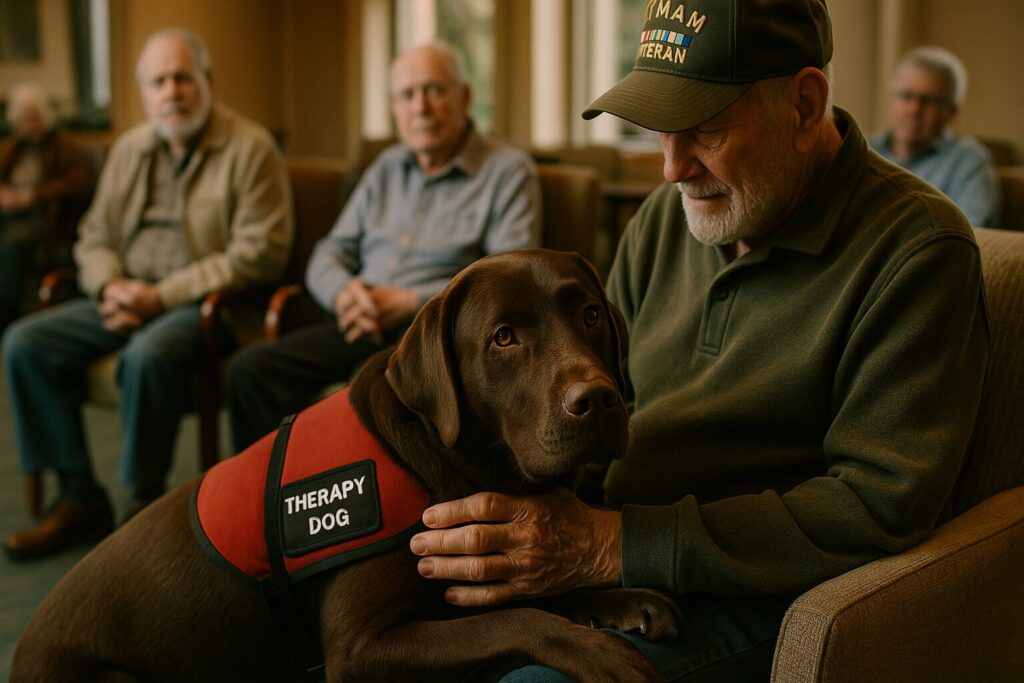
Benefits of a Therapy Dog
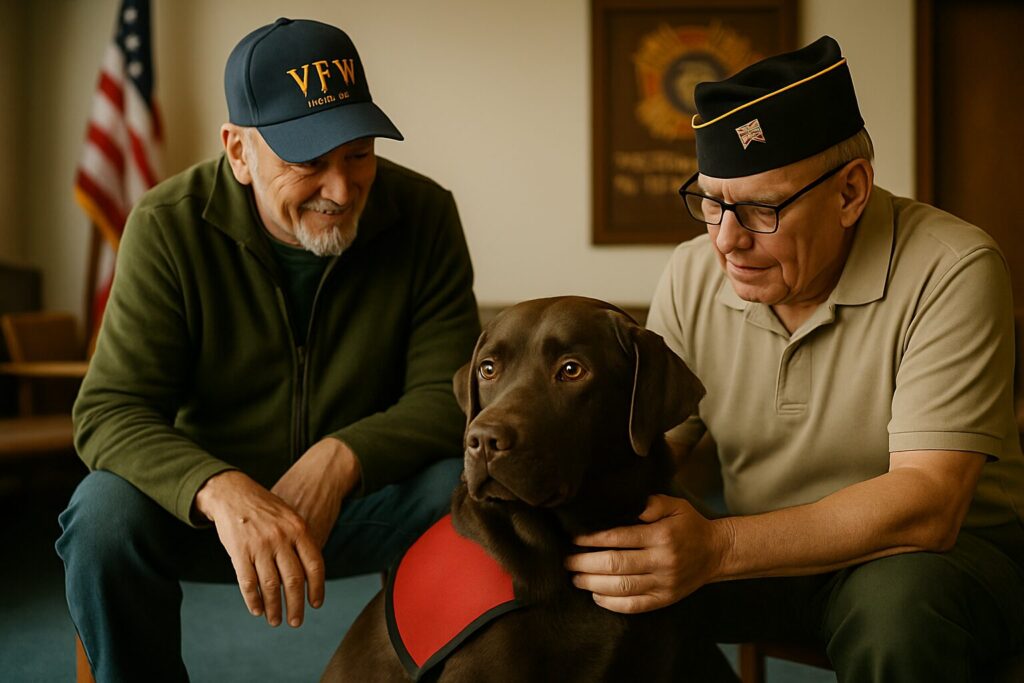
For Facilities: Improved morale, reduced stress, and enhanced community engagement.
For Clients: Emotional grounding, increased motivation, and social connection.
For Handlers: The joy of seeing lives brighten with every visit — and the deep bond with a dog who loves to help.
“A therapy dog doesn’t just comfort one person — they lift an entire room.”
Bring Comfort and Connection to Your Community
Frequently Asked Questions
What's the difference between a therapy dog and a service dog?
A service dog is trained to perform specific tasks for one person with a disability and has public access rights under the ADA. A therapy dog works with a handler to provide comfort to multiple people in settings like schools and hospitals, by invitation rather than by legal right.
What's the difference between a therapy dog and an emotional support animal (ESA)?
An ESA provides comfort to its own owner and has no special training or public access rights. A therapy dog is trained, evaluated, and works in public-facing roles to support other people, typically through scheduled visits.
How much does it cost to schedule a therapy dog visit?
We do not schedule teams, just train dogs to be a Certified Therapy Dog. You need to find a local organization like “Love on a Leash” or “Pet Partners” that can assist with putting you in contact with a team to schedule with.
Telephone No.5094819065