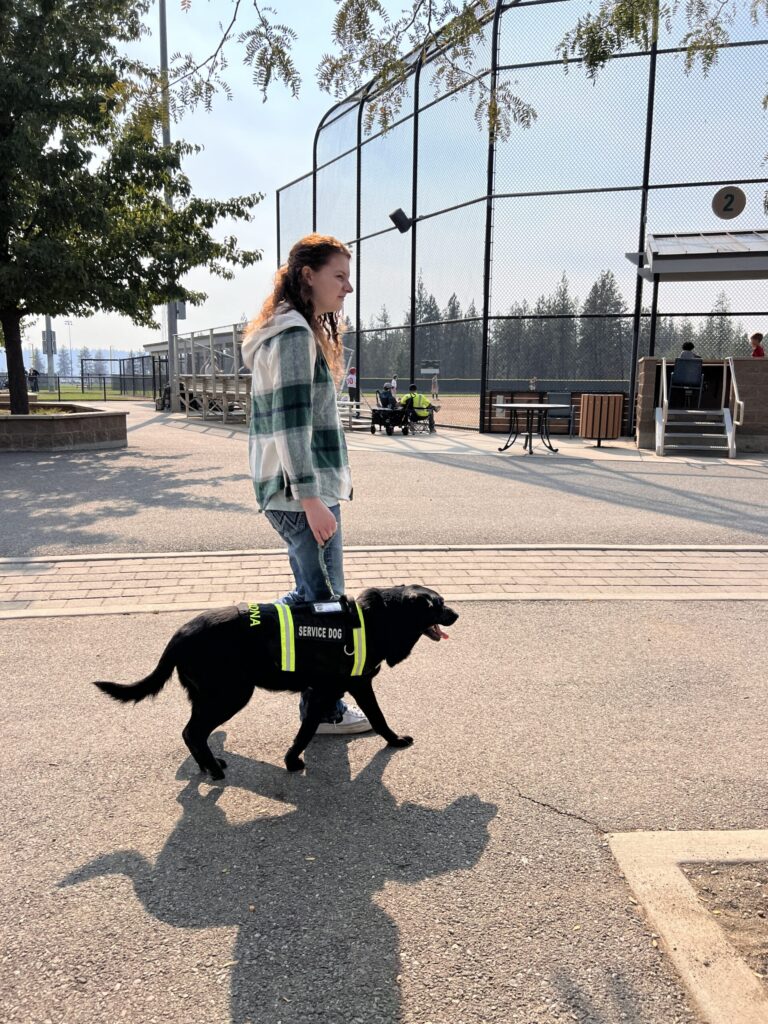
Phase 3: Task Work & Team Training
The final stretch of active training — where task mastery, handler partnership, and real-world performance come together. Each dog completes the AKC Community Canine (CGCA) title and personalized task refinement for service-readiness
Phase 3 Overview
Phase 3 is a 16-week, 200-hour intensive training stage focused on advanced task work, public access mastery, and handler transition.
This is where we solidify obedience, finalize service tasks, and prepare both dog and future handler for real-world independence.
At a Glance:
Phase: 3 – Task Work & Team Training
Length: 16 weeks
Active Training Hours: ~200 (≈ 600 total to date)
Typical Age: 10–14 months
Primary Focus: Task mastery · Handler partnership · Environmental reliability
AKC Title Tested: AKC Community Canine (CGCA)
Investment for Phase 3: $11,667. Cost may increase due to tasks needed and increased training needed.
Includes: Advanced public training, task filming, handler transition prep, third-party evaluation
What Phase 3 Looks Like
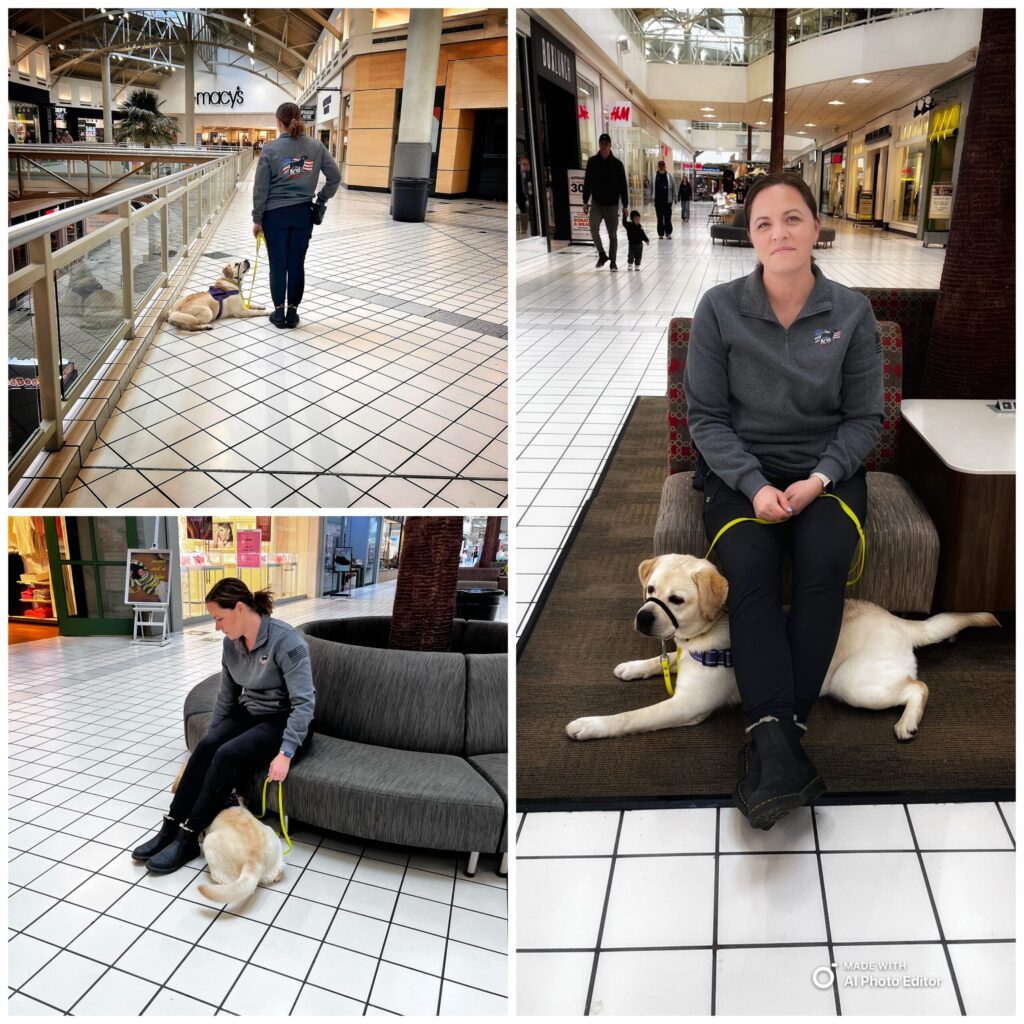
By Phase 3, dogs have completed over 400 hours of active training and are ready to perform consistently in any environment.
Our trainers now focus on precision, adaptability, and handler connection — ensuring that each service task works seamlessly in public settings.
This is also the phase where handlers begin direct involvement, learning how to communicate, manage, and confidently guide their new partners.
Advanced Task Work & Customization
Phase 3 is the most customized portion of our program.
Every service dog receives a minimum of three fully operational service tasks tailored to their future handler’s needs.
Our trainers refine these tasks to perform reliably even in busy, unpredictable environments like airports, train stations, and city plazas.
Common task categories include:
Mobility & Retrieval: picking up dropped items, opening doors, fetching medication or phone
Psychiatric & PTSD Support: deep-pressure therapy, crowd buffering, grounding, nightmare interruption
Autism Support: tethering, bolting prevention, repetitive behavior interruption, emotional regulation
Each task is proofed under distraction and filmed for handler reference — allowing clients to review proper techniques and troubleshooting methods even after graduation.
Handler Integration & Team Training
The transition from trainer to handler begins here.
During Phase 3, our staff work directly with the handler (or family) to teach communication methods, correction timing, and daily routines.
Handlers learn:
Proper command structure and tone
Reading their dog’s stress signals and focus levels
Task cueing and reinforcement
Managing the dog in real-world scenarios
Public etiquette and ADA compliance
- And More
This “Team Training” ensures that by the time of placement, both dog and handler are ready to function confidently as one.